
The truth about SPF!
Not All Sunscreens Are Created Equal
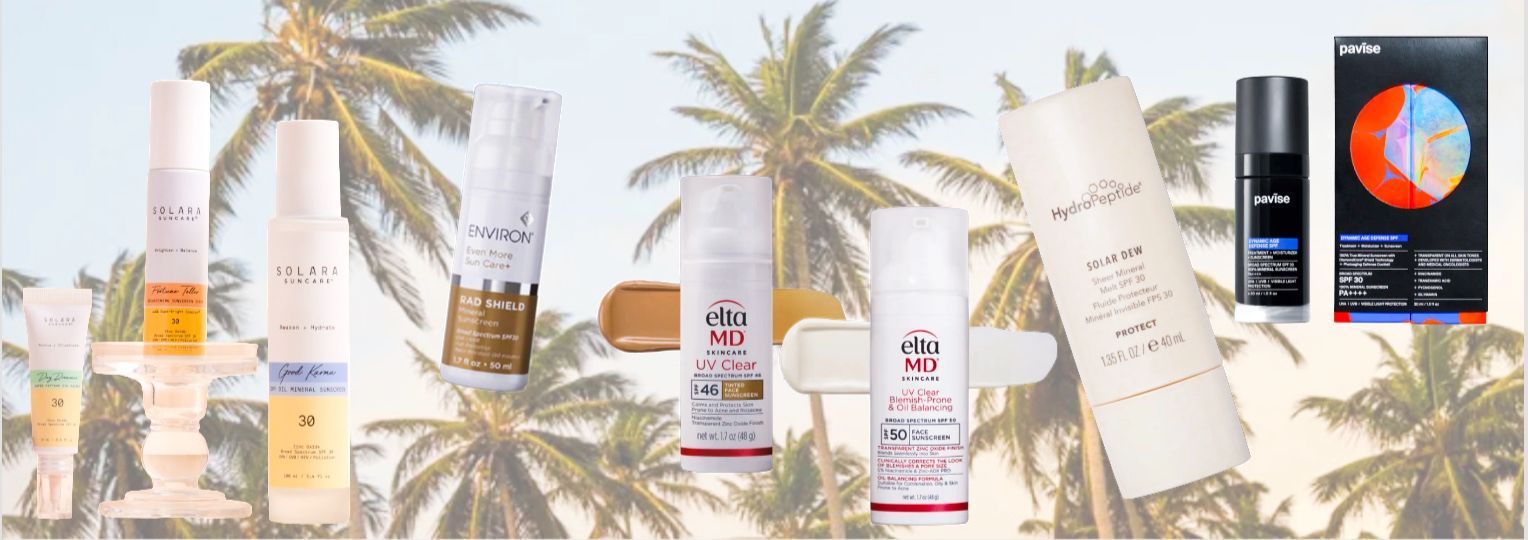
May is Skin Cancer Awareness Month!
While most people know they should be wearing sunscreen, very few actually understand how it works or what to look for.
As a medical provider in aesthetics, this is one of the biggest gaps I see:
Patients invest so much time and money in injectables, skincare, facials, chemical peels and laser procedures… but overlook the one thing that protects it all.
Let’s break it down simply — and correctly.
What Does SPF Actually Stand For?
Sun. Protection. Factor.
It measures how well a sunscreen protects your skin from UVB rays, which are responsible for:
- Sunburn
- DNA damage
- Skin cancer development
Ok so think of it like this: If your skin burns in 10 minutes, an SPF 30 would theoretically allow you to stay in the sun 30 times longer before burning.
However, this is based on perfect lab conditions, which don’t reflect real life. Am I right?
A more practical way to understand SPF:
- SPF 15 blocks ~93% of UVB rays
- SPF 30 blocks ~97%
- SPF 50 blocks ~98%
Higher SPF does not mean dramatically more protection.... it’s incremental.
And importantly: Reapplication every 2 hours is still essential.
Why the SPF Number Isn’t the only factor
Here’s where most people are misled: Two different products labeled SPF 30 can perform very differently.
Why?
Because SPF only measures protection against UVB rays, not UVA rays, which penetrate deeper and are responsible for:
- Premature aging
- Hyperpigmentation
- Collagen breakdown
- Long-term skin damage
This is why broad-spectrum protection (UVA + UVB) is critical.
What Else Matters in Sun Protection?
Zinc oxide is a mineral (physical) sunscreen ingredient that provides protection against both UVA and UVB rays.
The percentage of zinc oxide can impact how protective a sunscreen is, especially for UVA exposure.
General guidance:
- ~5% zinc oxide = minimal protection
- 10–15% = moderate protection
- 15–25% = stronger broad-spectrum coverage
This means not all SPF formulas are created equal, even if the SPF number on the bottle is the same.
Clinical vs. Drugstore Sunscreen
In Medical Aesthetics, we often hear the term “medical-grade sunscreen.”
Let’s clarify what that actually means.
Brands like EltaMD and SkinCeuticals are commonly recommended in clinical settings because they are formulated with:
- Optimized zinc oxide or hybrid filters
- Stabilized ingredients
- Better cosmetic feel (which improves patient compliance)
- Added skin-supporting ingredients (like niacinamide or hyaluronic acid)
- More consistent broad-spectrum coverage
On the other hand, over-the-counter options, like say, Banana Boat are:
- FDA-regulated and effective at preventing sunburn
- Often more affordable and accessible
- Frequently formulated with chemical filters
Important takeaway: Drugstore sunscreen is not ineffective, but it may not be ideal for:
- Post-procedure skin
- Acne-prone or sensitive skin
- Pigmentation concerns
- Long-term aesthetic outcomes
"The best sunscreen is ultimately the one you will use consistently"... Sure, but quality and formulation still matter!
Mineral vs. Chemical Sunscreen: What’s the Difference?
This is one of the most common questions patients ask.
Mineral (Physical) Sunscreens
Active ingredients: zinc oxide, titanium dioxide
How they work:
- Sit on top of the skin
- Reflect and scatter UV radiation
Pros:
- Broad-spectrum protection (especially with zinc oxide)
- Less irritating for sensitive or post-procedure skin
- Start working immediately upon application
Cons:
- Can leave a white cast (though modern formulas have improved significantly)
- May feel thicker depending on formulation
Chemical Sunscreens
Active ingredients: avobenzone, octinoxate, oxybenzone, etc.
How they work:
- Absorb UV radiation and convert it into heat
Pros:
- Lightweight and cosmetically elegant
- Easier to blend without residue
Cons:
- Require ~15–20 minutes before becoming effective
- Higher potential for irritation in sensitive individuals
- Some filters have raised environmental and safety concerns
Which Is Better?
There is no one-size-fits-all answer, but from a medical and aesthetic perspective:
Mineral sunscreens (especially zinc-based) are often
preferred
for:
- Post-procedure patients (lasers, peels, microneedling)
- Sensitive or acne-prone skin
- Patients concerned with pigmentation or melasma
Chemical sunscreens can still be a great option for:
- Daily wear if compliance is an issue
- Patients who dislike the texture of mineral formulas
The
most important factors
are:
- Broad-spectrum protection
- Consistent daily use
- Proper reapplication
What to Look For in a Sunscreen:
- SPF 30 or higher
- Broad-spectrum (UVA + UVB)
- Zinc oxide for reliable protection
- A formula you will actually wear daily
What is all comes down to is this-
Sunscreen is not just a skincare step, it’s a medical necessity.
If you are investing in your skin through treatments, products, or preventative care, sunscreen is what protects those results long-term.
AAOA's Recommendations:
Trusted Resources to Learn More:
For those who want to dive deeper into sunscreen safety and skin cancer prevention:
- Environmental Working Group (EWG) – Consumer guides on sunscreen ingredients and safety
- The Skin Cancer Foundation – Evidence-based education on prevention, detection, and treatment
- American Academy of Dermatology – Clinical guidelines and sun protection recommendations
The best aesthetic results don’t come from treatments alone- they come from protection, consistency, and education.
And it all starts with sunscreen.



























Share On: