PRESS RELEASE
January 7, 2026
American Academy of Aesthetics - Press Release
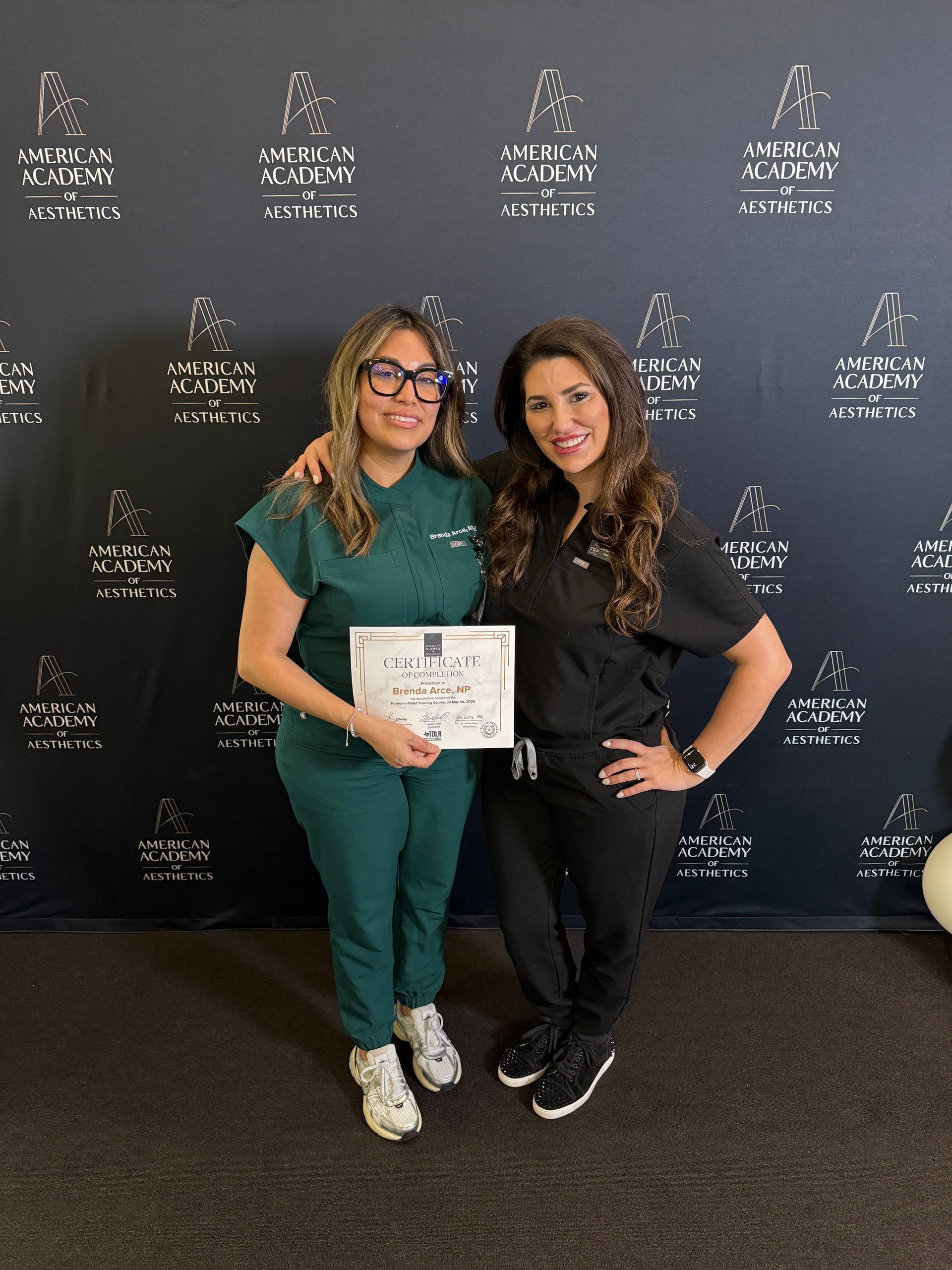
American Academy of Aesthetics Achieves National ANCC Accreditation
Coppell, Texas — The American Academy of Aesthetics (AAOA) proudly announces its new status as an ANCC-accredited provider of nursing continuing professional development, awarded by the American Nurses Credentialing Center’s Commission on Accreditation — the gold standard in nursing education.
This accreditation recognizes AAOA’s commitment to delivering the highest level of evidence-based, unbiased, and safety-driven education to nurses and advanced practice providers entering the medical aesthetics field.
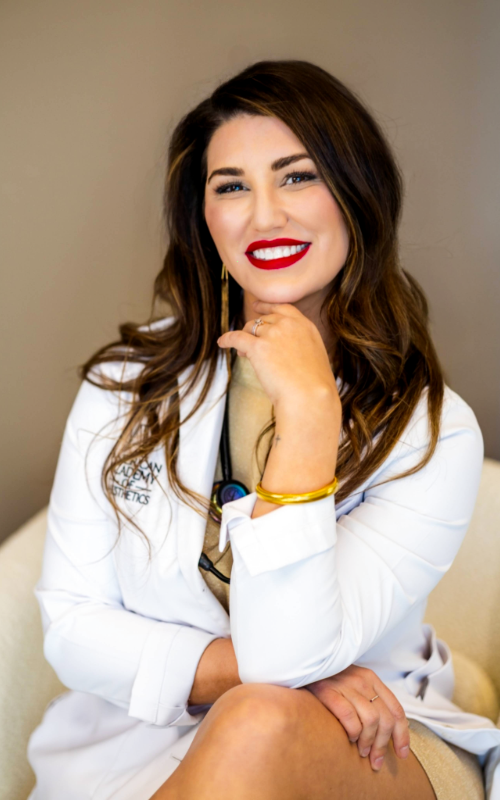
“Achieving ANCC accreditation is a milestone not only for our academy but for the entire aesthetics community,” said Lindsey Williams, MSN, APRN, FNP-BC, Accredited Provider Program Director. “Our mission has always been to elevate injector competence and patient safety. This recognition affirms that our programs meet the most respected national standards in nursing education.”
Through this accreditation, AAOA now offers nationally recognized nursing contact hours for eligible training programs including neurotoxin injection, dermal fillers, regenerative therapies, and more.
American Academy of Aesthetics (AAOA) is accredited as a provider of nursing continuing professional development by the American Nurses Credentialing Center’s Commission on Accreditation.
This accreditation represents the highest standards in nursing education and ensures that all courses awarding contact hours meet nationally recognized requirements for:
- Evidence accuracy
- Independence from commercial bias
- Qualified planners and faculty
- Clear learning outcomes
- Competency-based evaluation
- Fair, transparent disclosure
AAOA is committed to continuous quality improvement, safe practice in medical aesthetics, and supporting nurses through professional development that strengthens skills and enhances patient care.
The American Academy of Aesthetics continues to expand its offerings, technology integration, and hands-on model while upholding the highest principles of educational integrity, compliance, and clinical excellence.
For more information contact info@aaofaesthetics.com.


For years, Texas has often been called the “Wild West” of aesthetic medicine. Med spas operated in gray areas; cosmetic injections were sometimes performed by individuals without medical licenses, and “medical director” agreements were often used to justify questionable delegation practices. As of 2026, that era is effectively over. Texas law now makes it unmistakably clear: cosmetic injections are medical procedures and may only be performed by appropriately licensed medical professionals. This is not about limiting opportunity -it’s about patient safety, regulatory clarity, and professional accountability. Let’s break down what the law actually says. Cosmetic Injections Are the Practice of Medicine Under the Texas Occupations Code § 151.002 , the “practice of medicine” is defined as: “The diagnosis, treatment, or offer to treat a mental or physical disease or disorder or a physical deformity or injury by any system or method…” 🔗 Read the statute:
https://statutes.capitol.texas.gov/Docs/OC/htm/OC.151.htm Injecting botulinum toxin, dermal fillers, or other substances into the body to alter appearance clearly falls within treatment of a “physical deformity” or condition. That means injections are not cosmetic services - they are medical procedures. Delegation Has Legal Limits Many med spas previously operated under the assumption that a physician could delegate injections to anyone, as long as there was a “medical director.” Under Texas Occupations Code § 157.001, a physician may delegate medical acts only to: “a qualified and properly trained person acting under the physician’s supervision…” 🔗 Read the statute:
https://statutes.capitol.texas.gov/Docs/OC/htm/OC.157.htm The key phrase is qualified person . The Texas Medical Board rules clarify that nonsurgical cosmetic procedures - including cosmetic injections - are medical acts and must comply with delegation rules. See 22 Texas Administrative Code § 169.25 (Other Delegation) :
https://texreg.sos.state.tx.us/public/readtac$ext.ViewTAC?tac_view=5&ti=22&pt=9&ch=169&sch=A&rl=Y The Board has consistently maintained that these procedures are part of the practice of medicine and cannot be delegated outside lawful scope. Wait — Isn’t This Senate Bill 378? This is where a lot of confusion is happening. Many people believe the January 2026 clarification is tied to Senate Bill 378, sometimes referred to as the “Botox Party Bill,” which was scheduled to take effect September 1, 2025. Here’s the truth: SB 378 did NOT become law. It was vetoed. Because it was vetoed, it never amended the Texas Occupations Code. So if SB 378 did not pass… how is the law different? This Is Not a New Law - It’s Clarification and Enforcement of Existing Law The key misunderstanding is this: Texas did not pass a brand-new statute suddenly banning estheticians from injecting. Instead, the Texas Medical Board clarified and reinforced what has already existed in the Texas Occupations Code and Administrative Code: Cosmetic injections are the practice of medicine The practice of medicine requires a medical license Delegation cannot expand someone’s legal scope of practice The wording emphasis and regulatory interpretation have tightened.
The gray area is gone. But the legal foundation has been there all along. Where to Read the Actual Law Yourself If you want to understand this correctly (and we encourage you to do so), here is exactly where to look: 1. Texas Occupations Code § 151.002 Defines the “practice of medicine.” https://statutes.capitol.texas.gov/Docs/OC/htm/OC.151.htm Look specifically at the definition of practicing medicine — diagnosis and treatment of physical conditions by any system or method. 2. Texas Occupations Code § 157.001 Governs delegation of medical acts. https://statutes.capitol.texas.gov/Docs/OC/htm/OC.157.htm This statute allows physicians to delegate medical acts to a “qualified and properly trained person” under supervision. Important: Delegation does NOT override licensure laws. A physician cannot delegate a medical act to someone who does not legally have authority to perform medical acts. 3. Texas Administrative Code — 22 TAC § 169.25 Texas Medical Board rules regarding delegation. These rules explicitly include nonsurgical cosmetic procedures involving injections as medical acts. You can search directly at:
https://texreg.sos.state.tx.us/public/readtac$ext.ViewTAC Select:
Title 22 → Part 9 → Chapter 169 Why SB 378 Caused Confusion SB 378 attempted to make cosmetic injection restrictions more explicit in statutory language. Because it was vetoed, some assumed that meant: “Then estheticians can still inject.” That assumption is incorrect. The veto did not create permission. It simply meant the legislature did not add additional language - because the existing statutes already define injections as medical practice. The confusion comes from assuming:
“No new law passed” = “Nothing changed.” What changed is clarity, enforcement posture, and removal of ambiguity - not the core definition of medical practice. The Bottom Line This is not about a new law suddenly appearing in 2026. It is about: • Clearer regulatory interpretation
• Stronger enforcement consistency
• Removal of informal delegation loopholes
• Reaffirmation that injections are medical procedures SB 378 did not pass.
But the existing Texas Occupations Code and Medical Board rules remain fully in effect. Who Can Legally Inject in Texas? Under Texas law: Authorized Providers MD / DO (Physicians) PA (under physician delegation) APRN / NP (under physician delegation) RN / LVN (only under proper physician delegation and supervision) Dentists (within dental scope) Not Authorized Estheticians Cosmetologists Unlicensed personnel Having a medical director does not expand someone’s license.
Delegation cannot override scope of practice laws. This is the critical distinction that closes the historical loophole. What Changed in 2026? Previously, enforcement was inconsistent, and statutory language was less explicit about cosmetic injections in med spa settings. Many businesses relied on loosely structured delegation agreements. Recent clarifications and enforcement emphasis from the Texas Medical Board and legislature have made it clear: Cosmetic injections = medical practice Only licensed medical professionals may perform them Delegation must comply strictly with statute Medical directors are legally responsible for improper delegation The “gray area” is gone. Will Anyone Be Grandfathered In? No. Scope of practice is determined by licensure - not experience.
If someone does not hold a qualifying medical license, they cannot legally perform injections, regardless of how long they have been doing so. There is no grandfathering provision that overrides the Texas Occupations Code. What Happens If Someone Violates the Law? Potential consequences include: For the Injector Practicing medicine without a license (criminal offense) Administrative penalties Civil fines Injunctions Permanent damage to career eligibility For the Medical Director Disciplinary action by the Texas Medical Board License suspension or revocation Administrative penalties Civil liability exposure Potential malpractice implications Improper delegation is not a paperwork issue - it is a licensing issue. Why This Is Good for the Medical Aesthetics Industry This shift protects: ✔ Patients
✔ Ethical providers
✔ Reputable training institutions
✔ Legitimate med spa owners
✔ The future of aesthetic medicine Clear scope of practice boundaries elevate the profession.
They reduce adverse events, reduce illegal competition, and ensure proper training standards. Texas is no longer operating in ambiguity. That’s progress! Why AAOA Has Always Trained Medical Professionals Only for Injectables At American Academy of Aesthetics, we have always limited injectable training to licensed medical professionals only. Not because we wanted to exclude anyone. Because it’s ethical and it’s the law. And most importantly, because patient safety is non-negotiable. We believe: Injectables require medical assessment skills Complication management requires medical knowledge and critical decision-making skills utilizing that knowledge Vascular emergencies require licensed clinical authority Ethical training requires compliance We do not train outside scope of practice - and we never will. A Message to Estheticians: Your Career Is Not Over!! This is not a door closing. It’s clarity. There are many thriving, profitable roles for estheticians in medical aesthetics: Medical-grade facials Advanced skincare Dermaplaning Chemical peels Body Contouring Skin Tightening Device-based treatments where permitted Laser Hair Removal through proper TDLR licensing At AAOA, we proudly certify students in: ✔ Laser Hair Removal Technician licensing through TDLR ✔ Laser Safety Officer training
✔ Medical Aesthetic procedures that are fully within legal scope The future of aesthetics is not about crossing boundaries; it’s about mastering your scope. The Bottom Line Texas is raising the standard. Cosmetic injections are medical procedures.
Medical procedures require medical licenses.
Delegation has limits. Even if a physician says “you may inject under my supervision,” the law doesn’t allow it unless the person delegated holds a medical license that authorizes them to perform injections. The loophole is closed. And our industry is better for it. If you’re a licensed medical provider ready to train the right way... we’re here for you. If you’re an esthetician looking to expand legally and ethically... we’re here for you too. Progress protects everyone! American Academy of Aesthetics Educating the next generation of compliant, confident aesthetic professionals.


Share On: